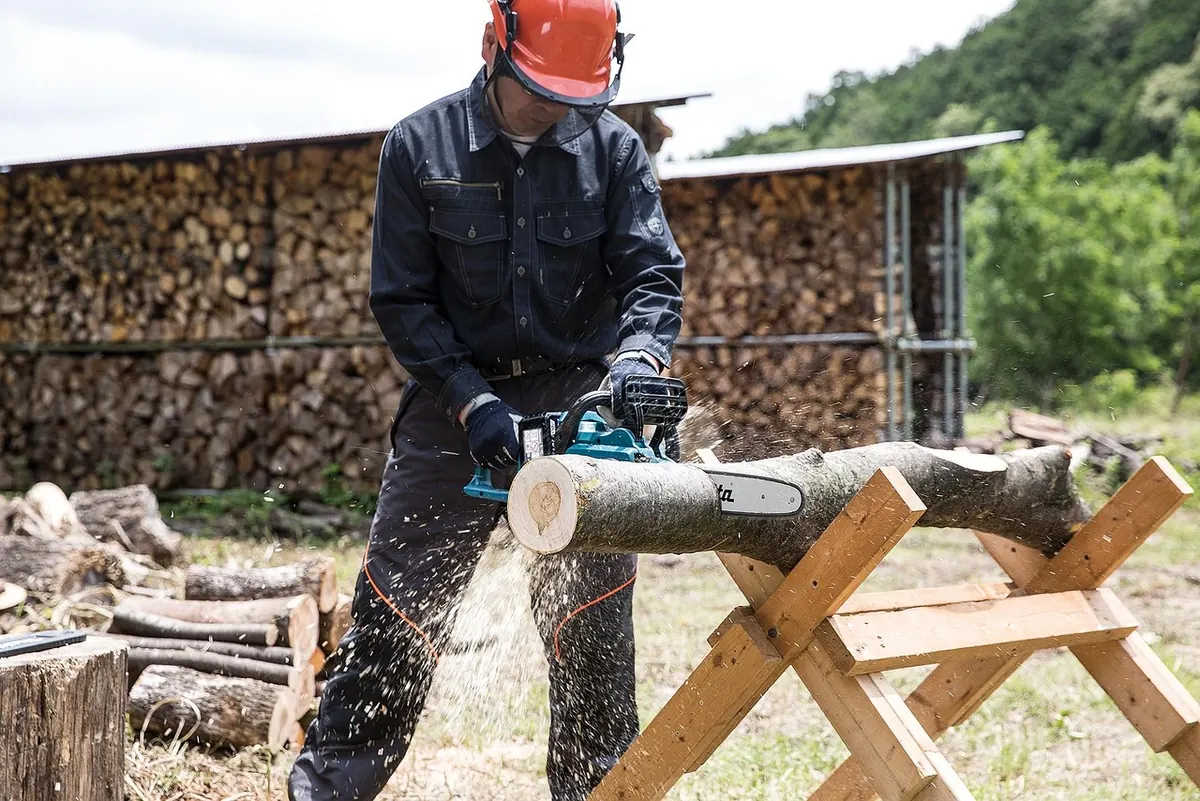
The blade doesn't care how many years you've been doing this. Rips go wrong in the first two seconds, and they almost always go wrong after someone skipped a step they've skipped a hundred times without consequence.
A pre-cut checklist isn't paperwork. It's the difference between noticing that your riving knife is out of line while the saw is still unplugged, and noticing it when a board climbs the blade. Twelve checks, about two minutes, then you cut.
Why a Written Routine Beats Memory
Everyone has a mental checklist. The problem is that memory quietly drops whatever you've gotten away with skipping — the guard you left off for one narrow rip, the push stick buried under a pile of offcuts, the hose you meant to reconnect.
The order below matters. You first, then the machine, then the air, then the stock. If any check fails, stop and fix it before you start. If the fix takes longer than you have, pick a different tool. A handsaw, a clamped straightedge, or a circular saw with a guide will all get the job done.
Eyes, Ears, and Everything Loose
- Eye protection on your face, not on the bench. Z87-rated safety glasses with side shields handle most cutting. Reach for goggles when you're working overhead or in a cloud of dust, and wear a face shield over your glasses when ripping on the table saw or running a router. Prescription lenses aren't safety glasses unless they're rated as such.
- Hearing protection within reach. Foam plugs, muffs, or both. Check them before you put them on — cracked muffs and grimy plugs tend to stay in the drawer, and then the saw runs without them anyway.
- Nothing loose. Sleeves rolled, hair tied back, hoodie strings tucked in. Off with rings, bracelets, and watches. Gloves come off before you touch a saw; cloth and spinning cutters don't negotiate.
Guards, Blade, and Kickback Control
- Guard in place and moving freely. If you pulled it off for a dado stack or a narrow rip, it goes back on before the next through cut. A guard propped up with a scrap of wood isn't a guard.
- Riving knife or splitter aligned. It should sit in line with the blade, roughly the same thickness as the blade body, so a closing kerf can't pinch and lift the stock.
- Pawls, featherboards, and a push stick. Anti-kickback pawls down and touching the work, featherboard set just ahead of the blade and light enough that the board still feeds smoothly, push stick hanging on the fence where your hand will actually find it.
- Sharp blade at the right height. A dull blade makes you push harder, and pushing harder is how hands drift toward the cut. Clean the pitch off, use the right tooth count for the material, and set the blade so the teeth clear the stock by a small margin — about a tooth's height for most rips.
Dust Collection and Air Quality
- Hose connected, gate open, collector running. Turn collection on before the blade bites, and let it run a few seconds after the cut to clear the cabinet.
- Bag and filter intact, bin not overfull. A bag past half full chokes airflow, and a torn filter sends the finest dust — the particles that hang in the air longest — right back into your shop.
- Fresh air and the right mask. Crack a door or window, or run an ambient air cleaner while you work. Wear a respirator for MDF, plywood, and anything painted or pressure-treated. If you have asthma or another breathing condition, talk to your doctor about the dust you're making and what protection is right for you.
Stable Stock, Support, and a Second Look
- Support set to table height on both sides. Roller stands, outfeed tables, sawhorses — whatever you're using, set it level with the saw table, lock the height, and check it again once the board is loaded. Support that sags mid-cut pinches the blade and turns a routine rip into a kickback.
- Inspect the board before it goes on the table. Flat face down, no rocking. Run a hand over it for staples, nails, screws, dried paint, and grit. Look for end checks, cracks, loose knots, and pitch pockets. Then picture the whole cut: where both hands start, where they end up, and where they'll be if the offcut shifts or the board binds.
A Two-Minute Version for Repeat Cuts
Batch work is where complacency lives. When you're running a dozen shelf boards or a stack of leg blanks, the full list can compress into something you can run in your head between cuts:
- Glasses on, plugs in.
- Guard in place, riving knife lined up.
- Push stick on the fence.
- Hose connected, gate open.
- Outfeed support locked at table height.
- Board checked for metal, grit, and cracks.
- Hands mapped for the entire cut.
Same seven lines, every board. On long runs
Photo: 5617024 / Pixabay